
Kawazu Seven Waterfalls: Nanadaru gorge guide
Walk downhill from Kawazu Nanadaru Promenade Upper Entrance for wooded pools, patterned basalt and suspension bridges. Allow about one hour one way for the 850-meter promenade, with repeated stairs above Shokeidaru.
The stepped promenade
The upper start is Kawazu Nanadaru Promenade Upper Entrance, 河津七滝遊歩道上入口. From there the route descends past Kama, Ebi and Hebi to Shokei, then continues by Kani and Deai toward the lowest fall, Odaru. The path follows the wooded gorge, with suspension bridges over the stream; the longer bridge spans 46 meters.
Above Shokeidaru, flights of stairs continue through the upper half of the walk. Wear shoes for steps and take the descent steadily. For a shorter visit, walk from the central parking area toward Shokeidaru and return the same way, leaving the upper stair section out. The full route’s one-way estimate excludes a return walk and travel from the coast.
Kama, Ebi and Hebi
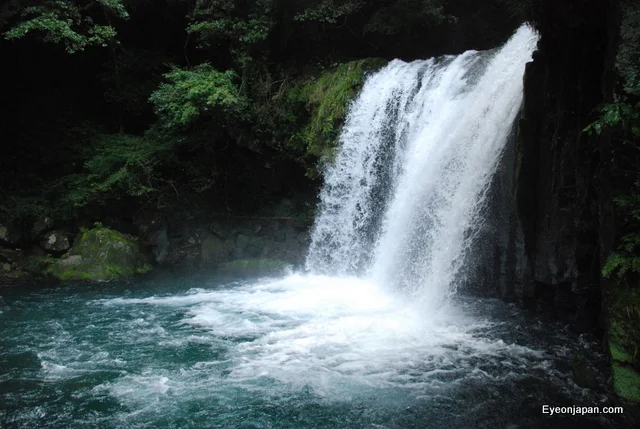
Kamadaru drops about 22 meters from projecting basalt, the second-highest fall in the gorge. Its narrow stream falls down a high rock face. At Ebidaru, water fans like a shrimp’s tail over a roughly five-meter drop; a suspension bridge looks toward the flow.
Hebidaru is smaller, about three meters high. Basalt patterns around the blue-green pool resemble snake scales and gave the fall its name. Along this part of the gorge, the path passes between high rock faces, patterned stone and pools beneath the trees, with a different shape of waterfall at each stop.
Shokeidaru, the lower falls and Odaru
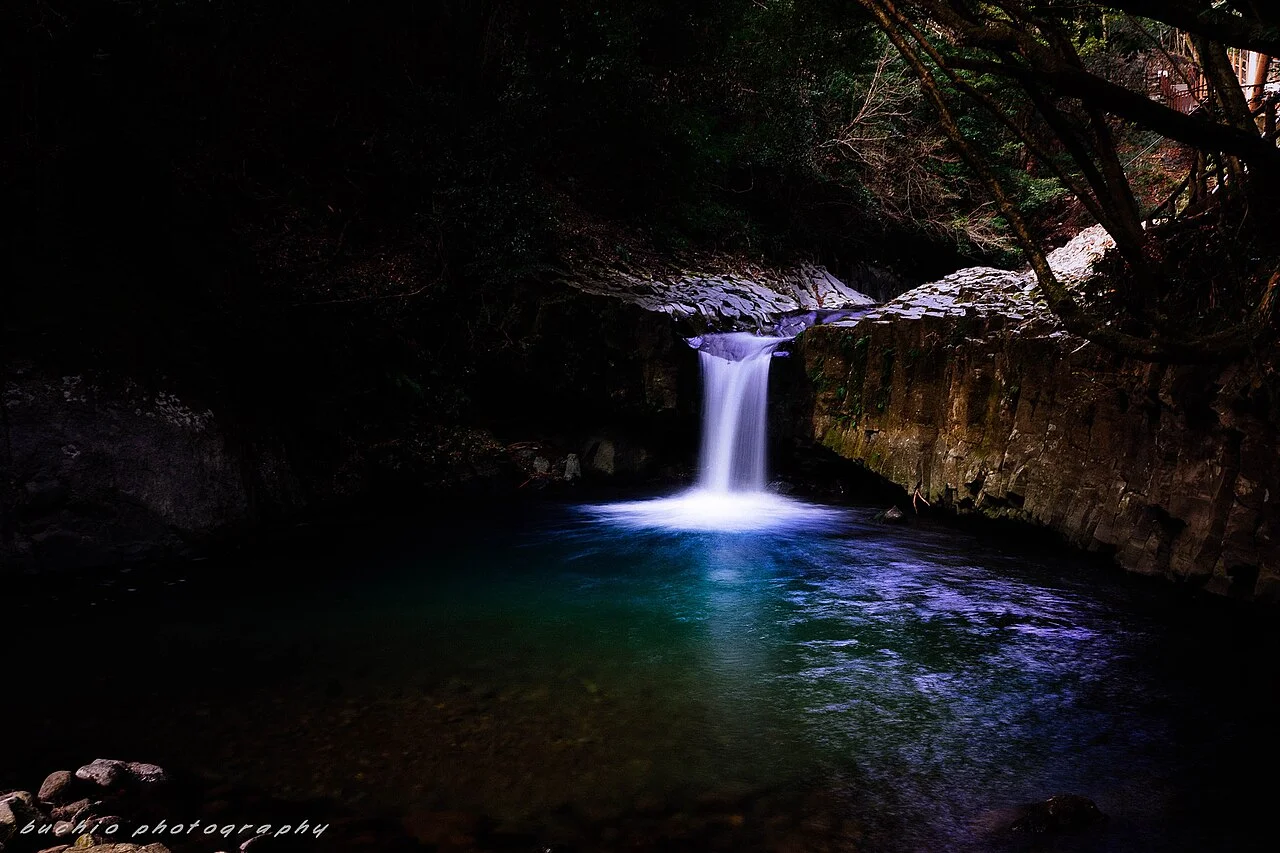
Shokeidaru falls about ten meters beside the bronze Dancer and I figures; the waterfall is seven meters wide. Below it, Kanidaru is a small white-water cascade among green banks. At Deaidaru, two streams join and clear blue water continues downstream.
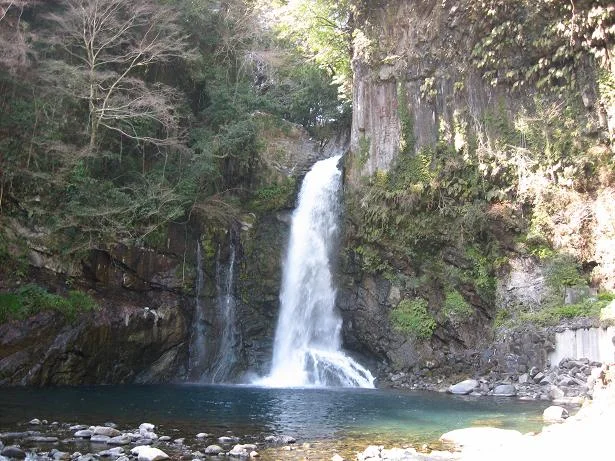
Odaru is the largest fall, dropping about thirty meters against basalt. Amagiso’s outdoor bathing area stands on private land beside it. The baths are closed until further notice after typhoon damage to their pipes. Back on the coast, Tokai Hotel Yuen in Inatori admits day bathers to sea-facing pools.
From Kawazu station, lunch and return
Take the coastal train to Kawazu station, then the bus toward Kawazu Nanadaru or a taxi. The inland journey takes about 20–30 minutes to the hot-spring settlement, before the gorge walk begins.
Kawazu Nanadaru Onsen, 河津七滝温泉, is the central bus stop beside the parking area and public toilets. For the downhill walk, continue on a bus toward Shuzenji Station, 修善寺駅. Kawazu Nanadaru Promenade Upper Entrance, 河津七滝遊歩道上入口, lies about ten minutes farther up the road. A taxi can take you directly to the upper entrance.
After descending the gorge, take the bus from the central stop or a taxi back to Kawazu station for the coastal train.
Lunch and a coastal stay
Bring lunch for the walk or eat in Kawazu town before traveling inland. Wasabien Kadoya, the wasabi-rice restaurant in Nanadaru, is closed. On the way back, Inatori’s seafood restaurants are north along the railway, with waterfront ryokans including Tokai Hotel Yuen.
Kawazu rail arrival and Shokeidaru in the gorge
Loading map…
Places
Stations
Sights
Reviewed: